About 76 minutes
Phantom of the Seven Stars — Context and Discussion
Space Future
17,369 recorded words. 2 minutes difference from this book's estimate.
View Gutenberg source #61855
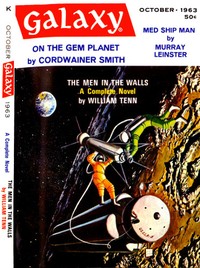
The source record for Med Ship Man — Reading Notes measures this digital text at 17,721 words, 1 hr 18 min estimated reading time, and 2 detected text sections.
The text analysis averages about 12.9 words per sentence, while the detected sections provide another way to judge how the source is divided.
Project Gutenberg metadata also associates the work with “Science fiction,” connecting these edition facts with the source record’s subject description.
Explore this collection
These alternatives are selected using recorded categories and estimated reading time.
About 76 minutes
Space Future
17,369 recorded words. 2 minutes difference from this book's estimate.
View Gutenberg source #61855About 75 minutes
Space Future
17,247 recorded words. 3 minutes difference from this book's estimate.
View Gutenberg source #63150About 88 minutes
Space Future
20,215 recorded words. 10 minutes difference from this book's estimate.
View Gutenberg source #62137Search stored excerpts and compare books → Choose by your preferences →
Choices use stored catalog measurements. Estimates vary with reading speed. A shared category is a catalog label, not a claim that two books have the same argument or literary quality.
Search reads excerpt text stored with this catalog and links to its associated Gutenberg record. The connection is stored in the site database; this tool does not recheck that every excerpt is word-for-word identical to that external record. Excerpt search does not cover every chapter and does not verify historical publication dates.
Catalog snapshot checked: 2026-09-25. Coverage: 92 public books, 92 available source excerpts.
Read the complete public-domain text at its original source.
Read on Project GutenbergThe story opens with Calhoun's taped voice repeating a standard approach-call to the planet Maya, which goes unanswered. The planet looks normal on screen—ice caps, continents, seas—but the silence is ominous. Calhoun's companion, Murgatroyd the tormal, expects the usual welcome, but instead they face a deserted spaceport. The tension between the ordinary appearance of the world and the absence of human response sets the stage for a mystery rooted in unseen forces.
The most immediate pattern in the excerpts is the contrast between the planet's serene appearance and the eerie lack of communication. Calhoun's recorded voice loops endlessly, but no one replies. The narrative emphasizes the visual normalcy of Maya—'absolutely clear and vividly colored'—against the growing irritation of the silence. This tension is not merely atmospheric; it signals a deeper disruption. The 'cattle fence' phenomenon later manifests as an invisible force that causes involuntary muscle spasms, missed heartbeats, and panic. Calhoun's medical training is tested by a threat he cannot see, only feel. The text describes symptoms with clinical precision: 'Every two seconds the muscles of his body tensed. Sometimes his heart missed a beat.' This pattern of visible normalcy masking invisible danger recurs throughout the excerpts.
The 'cattle fence' is not just a plot element but a structural motif. It first appears as a physical barrier on a highway, then becomes a metaphor for the inexplicable affliction affecting the colonists. The excerpts show Calhoun driving into it, experiencing its effects, and deducing its nature from evidence of previous uses: 'there was an inductive cattle fence across the highway here.' The narrative uses the fence to create a pattern of repetition and escalation. Earlier manifestations were weaker and shorter; this one persists for days. The fence also serves as a narrative hinge, forcing characters into physical and psychological crisis. Calhoun's reaction—fumbling for medication, forcing pills into Allison's mouth—highlights the breakdown of control under an invisible assault. The fence is both a literal obstacle and a symbol of the unknown forces that govern the planet.
The excerpts repeatedly emphasize absence: the missing spaceport crew, the silent cities, the abandoned highways. The description of the road system—'twenty-four lanes' narrowing to a single ribbon—implies a massive evacuation. The text notes 'brush and small trees were crushed and broken where cars had been forced to travel off the hard-surface roadways.' This physical evidence of panic contrasts with the earlier calm. The people of Maya are 'frightened' and 'couldn't return to their homes.' The weight of absence is palpable; the cities are 'still and silent and deserted.' Calhoun's investigation becomes a reading of traces—crushed vegetation, empty roads, unanswered calls—rather than direct confrontation. This pattern of reading absence as evidence is central to the story's method.
Readers should pay close attention to the way Calhoun interprets physical symptoms and environmental clues. The story rewards careful observation of small details—the tormal's reactions, the timing of the cattle fence's effects, the condition of vegetation. The excerpts leave the nature of the affliction unresolved, so focus on how Calhoun's medical reasoning adapts to an invisible, non-biological threat.
There’s something achingly lonely about Calhoun’s silent planet, that invisible force pressing down on everything alive. It made me think of another quiet dread I once felt, the creeping pressure in Mind Stealers of Pluto. Both stories hum with the same uneasy question—what happens when the mind’s own shelter turns against it? Each left me sitting still, listening to my own breath. That link, that thread, feels like a shared secret between old friends. Mind Stealers of Pluto — Reading Companion.
Build a private reading journal entry for this title.