About 48 minutes
The Princess and the Physicist — Edition Insights
Space Future
10,858 recorded words. 0 minutes difference from this book's estimate.
View Gutenberg source #51126
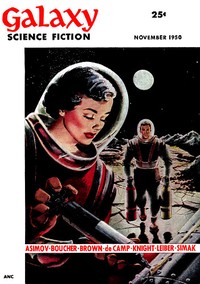
The catalog record for Transfer Point — Reading Companion provides practical reading context through 10,971 words, 48 min estimated reading time, and 2 detected text sections.
The text analysis averages about 14.6 words per sentence, while the detected sections provide another way to judge how the source is divided.
Project Gutenberg metadata also associates the work with “Science fiction,” connecting these edition facts with the source record’s subject description.
Explore this collection
These alternatives are selected using recorded categories and estimated reading time.
About 48 minutes
Space Future
10,858 recorded words. 0 minutes difference from this book's estimate.
View Gutenberg source #51126About 48 minutes
Space Future
10,964 recorded words. 0 minutes difference from this book's estimate.
View Gutenberg source #62139About 47 minutes
Space Future
10,794 recorded words. 1 minutes difference from this book's estimate.
View Gutenberg source #51726Search stored excerpts and compare books → Choose by your preferences →
Choices use stored catalog measurements. Estimates vary with reading speed. A shared category is a catalog label, not a claim that two books have the same argument or literary quality.
Search reads excerpt text stored with this catalog and links to its associated Gutenberg record. The connection is stored in the site database; this tool does not recheck that every excerpt is word-for-word identical to that external record. Excerpt search does not cover every chapter and does not verify historical publication dates.
Catalog snapshot checked: 2026-09-25. Coverage: 92 public books, 92 available source excerpts.
Read the complete public-domain text at its original source.
Read on Project GutenbergThe story opens with Vyrko in a retreat, the last safe place on Earth after the poisonous element agnoton has wiped out humanity. He is recording the end of the world in two forms: a factual record and an epic poem. His companion Lavra, daughter of the scientist who built the retreat, distracts him with mundane interruptions—apple pips falling into his typewriter, petulant questions. The scene establishes a voice that is wry, self-aware, and steeped in genre knowledge: Vyrko compares Lavra's remarks to a chess opening and reflects on how little breath people have for talking now.
After the opening, the narrative shifts to Vyrko's arrival in October 1948, where he is recovering in a hospital. The doctor notes his reading habits: “went through the whole damn hospital library like a bookworm with a tapeworm!” This prompts the doctor to suggest writing as a career. Vyrko, knowing the outcome of the 1948 election, uses a small loan to bet on the underdog (the Democrats, who actually won), securing funds to write. His attempts at standard fiction fail; editors cite a problem with “tone.” The solution dawns on him: he can write science fiction, drawing on his firsthand knowledge of the future. The story here becomes a meta-commentary on the genre, as Vyrko realizes his unique advantage—and the paradoxes it entails.
Vyrko’s time-travel is not a heroic adventure but a burden. He reflects on the gap between fictional time travel and his reality: “I've read all the time travel stories. I know what should happen. I teach them everything Kirth-Labbery knew and I'm the greatest man in the world. Only the fictional time travel never happens to a poor dope who took for granted all the science around him.” This self-deprecating voice recurs throughout. He is acutely aware of his limitations—he cannot replicate future technology, only recall its existence. The excerpts show him wrestling with the ethics of using foreknowledge: he calculates election bets carefully to avoid paradoxes, but the temptation to exploit his knowledge for profit is ever-present. The story’s tension lies not in action but in Vyrko’s internal conflict between duty, survival, and the fear of altering history.
Boucher weaves small, precise details that reward close reading. The apple pip that falls into the typewriter is not a one-off; Vyrko notes it is “part of the gambit, with the possible variants of grape seed, orange peel.” This pattern of distraction mirrors his struggle to focus on his epic while Lavra’s presence—her “long golden hair,” her scent—disrupts his work. Chess imagery appears early: Lavra’s remark is “as familiar an opening as P-K4 in chess.” Later, Vyrko thinks of the election bet in terms of odds and genetics, linking the randomness of chance to the survival of the human race. These recurring elements give the novella a tight, almost poetic structure, even as the plot unfolds through conversation and introspection.
The excerpts reveal that Transfer Point is as much about writing science fiction as it is a science fiction story. Vyrko’s plan to write for the pulps—starting with a story on the Religious Wars—mirrors Boucher’s own craft. The narrative explicitly references “Wheel-of-If” stories and the tropes of time travel fiction. This self-awareness is not merely clever; it drives the plot. Vyrko’s success depends on his ability to mimic the “tone” editors expect, a tone he can produce because he has lived the future. The story thus becomes a meditation on genre conventions, the economics of writing, and the paradox of creating fiction about a reality one knows firsthand. Readers familiar with mid-century pulp science fiction will recognize the in-jokes, but the novella also works as a standalone character study.
Because the excerpts are incomplete, several questions remain open. The full arc of Vyrko’s time travel—how he arrived in 1948, whether he can return—is not shown. The relationship with Lavra and her father Kirth-Labbery is hinted at but not resolved. The excerpts break off just as Vyrko realizes the “full pattern of the truth” about his manuscript. This editorial note cannot confirm whether the story ends with a twist, a resolution, or an open loop. Readers should approach the text with an awareness that the narrator’s self-deprecation may conceal as much as it reveals. The novella’s brevity (under 11,000 words) suggests a tight, focused narrative, but the excerpts leave room for multiple interpretations of Vyrko’s fate.
Readers coming to Transfer Point for the first time will benefit from paying close attention to the interplay between Vyrko’s present-tense narration and his flashbacks to the future. The story rewards those who notice small details—the apple pip, the chess metaphor, the repeated references to “tone”—as they accumulate into a coherent portrait of a man out of time. Boucher’s prose is economical but layered, and the novella’s meta-fictional elements are best appreciated on a second reading. Approach it as a character study with a speculative premise, not as a conventional time-travel adventure.
There’s a strange tenderness in Transfer Point—Vyrko’s loneliness among futures that refuse to arrive. It made me think of another quiet book, one that circles the same ache of living between times. Captain Chaos — Context and Discussion feels like a companion in that fog, not an answer. Just a familiar hand on the same worn railing, watching the same tide.
Answer a few questions and save a private reflection on this device.