About 312 minutes
Alien Minds — Edition Insights
Space Future
71,625 recorded words. 50 minutes difference from this book's estimate.
View Gutenberg source #50863
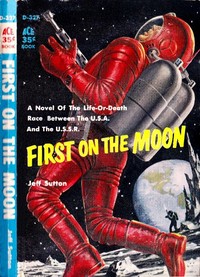
The catalog record for First on the Moon — Background and Themes provides practical reading context through 60,142 words, 4 hr 22 min estimated reading time, and 6 detected text sections.
The text analysis averages about 10.8 words per sentence, while the detected sections provide another way to judge how the source is divided.
Project Gutenberg metadata also associates the work with “Science fiction,” connecting these edition facts with the source record’s subject description.
Explore this collection
These alternatives are selected using recorded categories and estimated reading time.
About 312 minutes
Space Future
71,625 recorded words. 50 minutes difference from this book's estimate.
View Gutenberg source #50863About 92 minutes
Space Future
21,120 recorded words. 170 minutes difference from this book's estimate.
View Gutenberg source #61845About 88 minutes
Space Future
20,215 recorded words. 174 minutes difference from this book's estimate.
View Gutenberg source #62137Search stored excerpts and compare books → Choose by your preferences →
Choices use stored catalog measurements. Estimates vary with reading speed. A shared category is a catalog label, not a claim that two books have the same argument or literary quality.
Search reads excerpt text stored with this catalog and links to its associated Gutenberg record. The connection is stored in the site database; this tool does not recheck that every excerpt is word-for-word identical to that external record. Excerpt search does not cover every chapter and does not verify historical publication dates.
Catalog snapshot checked: 2026-09-25. Coverage: 92 public books, 92 available source excerpts.
Read the complete public-domain text at its original source.
Read on Project GutenbergThe novel opens not on the launch pad but inside a nearly empty dormitory room that feels like a prison. Adam Crag, confined by a mysterious phone call from Colonel Gotch, stares at the distant rocket through a small window while sentries guard the building. The prologue introduces four silver-and-gray rockets—three drones and one manned ship—all aimed at the crater Arzachel on the moon. Sutton immediately establishes a dual tension: the technical race against time and the personal threat of a saboteur among the crew. The narrative voice is lean, favoring short declarative sentences and precise technical details about propellants, mass ratios, and three-stage design. The Cold War context is explicit: the first moon flight will give either East or West control over Earth.
The prologue's description of the rockets as "sisters except for color" introduces a key motif: identical exteriors hiding crucial differences. One rocket carries a space cabin; the others are drones. The color distinction—silver versus ashen gray—hints at the visual cues that will matter later. Sutton also foreshadows obsolescence: a nuclear-powered successor is being built on the West Coast, but the sisters cannot wait. The phrase "Time was running out" closes the prologue, setting a countdown that will structure the entire novel.
The drone Baker's approach becomes a ticking clock. Crag watches the master chrono as Prochaska struggles to repair the console. At 0812, the deadline passes; at 0813, Prochaska springs up and nods. The lost minute may be fatal. Sutton uses precise times and velocities—90,000 feet over Alphons at a thousand miles per hour—to create a sense of real-time pressure. The drone's braking rockets blast continuously, but the instruments show they cannot make it. Crag's hand clenches the back of Prochaska's seat; he cannot tear his eyes from the scope. The scene ends with the drone seemingly doomed, a cliffhanger that underscores the high stakes of both sabotage and survival.
The excerpt also reveals the mission's broader stakes. Gotch warns that the loss of Drone Baker could be fatal not just to the mission but to survival. The airlock and scant supplies become lifelines until Arzachel can handle incoming rockets on a "better-than-chance basis." This detail grounds the space race in practical logistics: the moon base is not self-sufficient. Sutton avoids grand speeches about destiny; instead, the characters focus on wiring, fuel margins, and repair time. The traitor's identity remains unknown, but the clues are planted in behavior, not dialogue. Readers are invited to watch for inconsistencies in how each man reacts to crisis.
The novel's 1958 publication date places it at the height of the space race, before any human had reached orbit. Sutton's technical details reflect contemporary knowledge: drones, analog computers, radio-controlled servos. The moon is described as a "strange bleak world" with craters like Arzachel, Ptolemaeus, and Alphons—real lunar features. The narrative assumes a race between two unnamed superpowers, with the East as the implied antagonist. Readers familiar with Cold War thrillers will recognize the pattern of suspicion, limited information, and the lone hero fighting both external threats and internal betrayal. The excerpts offer no resolution, leaving the traitor's identity and the mission's outcome open.
Pay close attention to how Sutton uses technical details to build suspense: the precise times, fuel calculations, and repair sequences are not decoration but the engine of the plot. The traitor is revealed through small behavioral cues—a hesitation, a too-quick explanation—rather than dramatic confessions. The novel rewards careful reading of the crew's interactions under pressure. Because the excerpts are incomplete, the reader must infer the full arc of the sabotage plot and the eventual fate of the mission. Treat every technical failure as a potential clue, and every character's reaction as a piece of evidence.
There’s something about Sutton’s countdown, that hush before the launch, where every small repair feels like a secret held against four men. It reminded me of another quiet tension, a different claustrophobia, waiting in The Hairy Ones — Text and Context. That same feeling of being watched by something you can’t quite name, and the story just sits with you afterwards, gently.
Use these questions to collect your thoughts before moving on.