About 42 minutes
Exploiter's End — Context and Discussion
Space Future
9,525 recorded words. 0 minutes difference from this book's estimate.
View Gutenberg source #40970
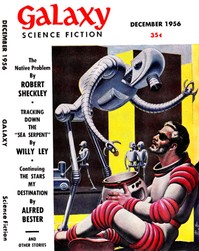
The catalog record for The Moons of Mars — Edition Insights provides practical reading context through 9,502 words, 42 min estimated reading time, and 1 detected text section.
The text analysis averages about 13.9 words per sentence, while the detected sections provide another way to judge how the source is divided.
Project Gutenberg metadata also associates the work with “Science fiction,” connecting these edition facts with the source record’s subject description.
Explore this collection
These alternatives are selected using recorded categories and estimated reading time.
About 42 minutes
Space Future
9,525 recorded words. 0 minutes difference from this book's estimate.
View Gutenberg source #40970About 42 minutes
Space Future
9,457 recorded words. 0 minutes difference from this book's estimate.
View Gutenberg source #61263About 43 minutes
Space Future
9,888 recorded words. 1 minutes difference from this book's estimate.
View Gutenberg source #51092Search stored excerpts and compare books → Choose by your preferences →
Choices use stored catalog measurements. Estimates vary with reading speed. A shared category is a catalog label, not a claim that two books have the same argument or literary quality.
Search reads excerpt text stored with this catalog and links to its associated Gutenberg record. The connection is stored in the site database; this tool does not recheck that every excerpt is word-for-word identical to that external record. Excerpt search does not cover every chapter and does not verify historical publication dates.
Catalog snapshot checked: 2026-09-25. Coverage: 92 public books, 92 available source excerpts.
Read the complete public-domain text at its original source.
Read on Project GutenbergThe story opens with a narrator observing a Martian boy who whistles with mechanical precision—resuming his tune on the exact note and step where he left off after an interruption. The boy carries a butterfly net that seems to carry him, and his earless head marks him as Martian. His chosen tune, 'The Calm' from the William Tell Overture, strikes the narrator as oddly adult. These details establish a character whose every action is deliberate, setting up a mystery that unfolds through careful observation of behavior and landscape.
The narrator’s first encounter with the boy is built on small, telling details. The boy stops whistling and walking simultaneously, 'as though he had pulled a switch or turned a tap.' When asked about the tune, he replies 'deadpan,' his brown eyes never blinking. Later, when confronted about being followed, he accuses the narrator with grave formality: 'A gentleman doesn’t do that to another gentleman.' His movements are consistently described as mechanical—he resumes his walk with the same foot and note. This precision suggests a mind that operates by rules, which becomes central to the plot.
The Martian landscape is not just backdrop but active participant. The boy lives in a 'crumbling section' marking old mine-workings. He travels toward 'the ruins of the ancient Temple City of the Moons,' passing 'rag-cliffs' of filigree stone that hide the entrance to 'the valley of the two moons.' The narrator takes a shortcut over these cliffs, descending a 'winding, sand-worn path.' The temple stones are described as 'breast bones from the desiccated carcass of an animal.' This barren, skeletal imagery reinforces the danger and desolation, while the specific geography—the valley named for Mars’s moons Deimos and Phobos—ties the setting to the title.
The boy’s whistle serves multiple functions. Initially it marks his character—a cheerful, precise sound. But when danger arrives, the whistle transforms: 'a shrill blast of sound in an octave of urgency; a whistle, sure, but a warning one.' It breaks off abruptly, leaving 'tailings, like the echo of a death cry.' The narrator interprets this as a signal, and a gunshot follows. The whistle thus becomes a plot device, bridging the boy’s innocent habit and the violent confrontation. The narrator’s response—throwing his hat out as a decoy—shows he understands the whistle’s meaning.
The narrator reveals that the boy believes his father was killed over a gold vein—a vein the narrator knows does not exist: 'There wasn’t, isn’t, never will be any gold on this planet.' Yet he cannot bring himself to shatter the boy’s dream. The killer is identified as Harry Smythe, who shoots at the narrator from a hiding place. The narrator wounds Smythe’s hand, and Smythe acknowledges the shot with 'Good shooting, mate.' The confrontation is economical, resolved in a few lines. The story leaves the boy’s fate ambiguous after his scream, focusing instead on the narrator’s pragmatic response to the ambush.
Readers should attend to the story’s use of repetition and pattern—the boy’s mechanical consistency, the recurring image of the butterfly net, and the whistle that shifts from idle tune to urgent alarm. The narrative moves between close observation of the boy and the narrator’s tactical decisions, creating a tension between innocence and violence. The incomplete excerpts leave the resolution unclear, but the structure suggests a tight, character-driven mystery where every detail matters.
There’s something about that whistling boy on Mars—how his precision made the mystery feel almost tender. It reminded me of the way time bends around certain stories, and I found myself thinking of A Witch in Time — Context and Discussion, where the same quiet ache of moments slipping away lingers. Both feel less like tales and more like half-remembered afternoons.
Answer a few questions and save a private reflection on this device.