About 262 minutes
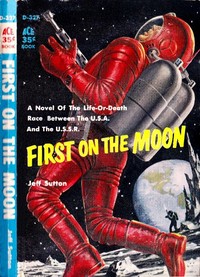
First on the Moon — Background and Themes
Space Future
60,142 recorded words. 50 minutes difference from this book's estimate.
View Gutenberg source #43235

Alien Minds — Edition Insights can be approached with a clearer sense of reading commitment from its source measurements: 71,625 words, 5 hr 12 min estimated reading time, and 7 detected text sections.
The text analysis averages about 16.6 words per sentence, while the detected sections provide another way to judge how the source is divided.
Project Gutenberg metadata also associates the work with “Science fiction,” connecting these edition facts with the source record’s subject description.
Explore this collection
These alternatives are selected using recorded categories and estimated reading time.
About 262 minutes
Space Future
60,142 recorded words. 50 minutes difference from this book's estimate.
View Gutenberg source #43235About 449 minutes
Space Future
103,137 recorded words. 137 minutes difference from this book's estimate.
View Gutenberg source #49525About 92 minutes
Space Future
21,120 recorded words. 220 minutes difference from this book's estimate.
View Gutenberg source #61845Search stored excerpts and compare books → Choose by your preferences →
Choices use stored catalog measurements. Estimates vary with reading speed. A shared category is a catalog label, not a claim that two books have the same argument or literary quality.
Search reads excerpt text stored with this catalog and links to its associated Gutenberg record. The connection is stored in the site database; this tool does not recheck that every excerpt is word-for-word identical to that external record. Excerpt search does not cover every chapter and does not verify historical publication dates.
Catalog snapshot checked: 2026-09-25. Coverage: 92 public books, 92 available source excerpts.
Read the complete public-domain text at its original source.
Read on Project GutenbergThe opening chapter of Alien Minds drops the reader directly into the alien marketplace of Stearra on the planet Estrella, where secret serviceman George Hanlon, disguised as a native, haggles for eight roches—tailless wild dogs. The narrative immediately establishes Hanlon's telepathic ability: he reads the merchant's surface thoughts, sensing a conflict between ethics, love of haggling, and greed. This mental probing is a recurring tool, not a mere gimmick; it shapes every interaction. The disguise is thorough—cosmetic alterations make him appear almost totally unhuman—yet Hanlon remains anxious about being recognized. The prose is brisk, focused on action and sensory detail: the stench of uncleaned kennels, the frenzied yelping of roches. The reader is thrust into a fully realized alien world without exposition, learning through Hanlon's eyes and mind.
From the first page, Hanlon's telepathy is not a vague power but a precise instrument. He reads the merchant's mind to detect suspicion, and later uses it to locate his father's thought-pattern: “faintly, just barely on the threshold of his consciousness, he caught a familiar thought-pattern.” This ability drives the plot—it is how he gathers intelligence, avoids traps, and pursues his mission. The excerpts show that telepathy has limits: Hanlon must concentrate, and the target's thoughts are not always clear. The narrative treats mind-reading as a skill that requires practice and effort, not an infallible superpower. This grounded approach makes the speculative element feel credible and integral to the spycraft.
Hanlon's disguise is more than a costume; it is a sustained performance. The cosmetic specialist has altered his outward structure, and he must mimic Estrellan speech, mannerisms, and even thought patterns. The story emphasizes the risk of exposure: Hanlon is “still afraid he might be recognized as a stranger and an alien.” His cheap clothing draws a questioning look from the merchant, but his jingling coins and confident reply maintain the facade. The setting—a market square with open-faced stalls, motor-trikes, and five-sided houses—is rendered with enough concrete detail to feel lived-in. The reader experiences the alien world through Hanlon's constant vigilance, making the cultural immersion a source of tension rather than mere backdrop.
The middle excerpt shifts to a chase sequence that showcases the novel's pacing and physical stakes. Hanlon, after being ambushed, flees on a stolen motor-trike, pursued by armed gangsters with flameguns. The description is tight and sensory: “tires shrieked at the sudden braking,” “flamegun flashes sprang out at him.” Hanlon's tactical thinking—feinting straight then swerving, using darkness and woods for cover—drives the action. The passage also reveals a key plot point: the gangsters were lying in wait, suggesting Hanlon's movements are known. This raises questions about betrayal or surveillance that the excerpts do not answer. The chase is a set piece that demonstrates the novel's blend of space-opera technology (acetylene engines, reflector-lanterns) with classic thriller tension.
Evans writes in a direct, mid-century style that favors action over introspection. Dialogue is functional: “Were you looking for a roch, nyer?” The narration stays close to Hanlon's perspective, using interjections like “Yipe!” and exclamations such as “by the great John Snyder” to convey his personality. The prose is efficient—no word is wasted on philosophical digression. The excerpts cover disguise, telepathic reconnaissance, a rescue attempt, and a chase within a few pages, demonstrating the novel's compact plotting. This economy extends to world-building: terms like “roch,” “nyer,” and “flamegun” are introduced without gloss, trusting the reader to infer meaning from context. The result is a fast-moving narrative that prioritizes momentum over explanation.
The excerpts from Alien Minds present a self-contained segment of a larger story: a secret agent on an alien world, using telepathy and disguise to rescue his father from gangsters. The narrative does not reveal the outcome of the chase, the fate of the father, or the broader mission. Readers should expect a linear, action-oriented plot with a focus on Hanlon's resourcefulness. The novel's appeal lies in its brisk pacing, practical use of speculative elements, and the tension of operating undercover in an unfamiliar culture. Approach it as a mid-century space adventure that values ingenuity over introspection.
Reading about the agent’s quiet mind-touch on Estrella reminded me of the loneliness aboard that other ship. There, too, the real distance wasn’t between stars, but between people who couldn’t quite hear one another. A softer echo, that one, less chase and more waiting. Space-Liner X-87 — Background and Themes sits beside it in my memory like a long, slow exhale.
Save your reaction, strongest insight, and memorable passage.