About 76 minutes
Phantom of the Seven Stars — Context and Discussion
Space Future
17,369 recorded words. 1 minutes difference from this book's estimate.
View Gutenberg source #61855
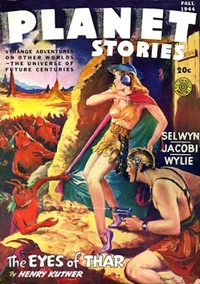
This digital edition of The Soul Eaters — Reading Notes is described by source-level measurements including 17,247 words, 1 hr 15 min estimated reading time, and 2 detected text sections.
The text analysis averages about 15.8 words per sentence, while the detected sections provide another way to judge how the source is divided.
Project Gutenberg metadata also associates the work with “Science fiction,” connecting these edition facts with the source record’s subject description.
Explore this collection
These alternatives are selected using recorded categories and estimated reading time.
About 76 minutes
Space Future
17,369 recorded words. 1 minutes difference from this book's estimate.
View Gutenberg source #61855About 78 minutes
Space Future
17,721 recorded words. 3 minutes difference from this book's estimate.
View Gutenberg source #50999About 88 minutes
Space Future
20,215 recorded words. 13 minutes difference from this book's estimate.
View Gutenberg source #62137Search stored excerpts and compare books → Choose by your preferences →
Choices use stored catalog measurements. Estimates vary with reading speed. A shared category is a catalog label, not a claim that two books have the same argument or literary quality.
Search reads excerpt text stored with this catalog and links to its associated Gutenberg record. The connection is stored in the site database; this tool does not recheck that every excerpt is word-for-word identical to that external record. Excerpt search does not cover every chapter and does not verify historical publication dates.
Catalog snapshot checked: 2026-09-25. Coverage: 92 public books, 92 available source excerpts.
Read the complete public-domain text at its original source.
Read on Project GutenbergWilliam Conover's 1944 novella, published in Planet Stories, opens with a disgraced space captain reading a farewell letter from his lover Marla, whose description—'slender as the palms of Venus'—immediately establishes a lush, romanticized solar system. The story's tension emerges from the contrast between Venus's decadent pleasure palaces and the barren, deadly rogue planet where protagonist Dennis Brooke is marooned. Conover's prose shifts from the 'barbaric rhythms' of a Mercurian dancer to the cold, scientific horror of 'entities' that drain life energy. The excerpts reveal a pattern of sensory overload—hypnotic chambers, opalescent globes—followed by stark violence, suggesting a narrative that balances pulp adventure with psychological dread.
The opening scenes immerse the reader in Venus's boom-era excess: the Inter-planetary Palace, the Jovian Chamber where 'every dream of a man's desire was marvelously induced,' and dancers who leave 'no doubt as to her intentions.' This opulence is undercut by Dennis's emotional numbness—he finds the 'open promise' of a Mercurian dancer 'left him cold.' The contrast sharpens when he is marooned on a rogue planet, where the only 'solitude' Venus offers is 'the fatal one of her swamps and virgin forests.' The excerpts show a protagonist caught between two extremes: artificial paradise and lethal wilderness. Conover uses Venusian luxury to heighten the stakes of survival, making the barren asteroid feel like a punishment for past indulgence.
The globes that drain life energy are not merely predatory; they react to emotion. When Randall panics, the spheres 'detached themselves and floated silently upwards' and later 'swooped downwards' to envelop him. Conover emphasizes that 'fear being perhaps one' of the most powerful emotions—the sentence is cut off, but the implication is clear. The crew's atom-blasts only make the globes 'glow supernally vivid,' suggesting that conventional weapons are useless. This detail aligns with the catalog subject 'Space pirates,' but the real menace is not human. The entities' behavior suggests a psychological component: they are drawn to fear, making courage or calmness a potential defense. The narrative thus shifts from external threat to internal control, a subtle twist on the space adventure formula.
Conover's prose moves in short, punchy sentences during action—'Action! Dennis shouted. Instantly several atom-blasts spewed their deadly charge'—and longer, more ornate passages for atmosphere. The description of the globes as 'a seething cauldron of prismatic hues' contrasts with the clinical 'they are entities.' This stylistic split mirrors the story's dual focus: romantic space opera and horror. The excerpts also show a pattern of abrupt violence: Randall's death is described in a single paragraph, from 'flailing his arms' to 'shriveling' and falling 'crumpled.' The narrative does not linger on grief; instead, Dennis's reaction is 'flaming anger' and a vow to destroy the entities. This pacing, typical of pulp serials, keeps the story moving but risks undercutting emotional weight.
Readers should note that the excerpts end before the resolution, leaving questions about how Dennis and his crew will combat entities that feed on fear. The story's title, The Soul Eaters, hints at a metaphysical dimension beyond the physical danger. Pay attention to how Conover balances the space-pirate setup (Koerber is mentioned but never appears in the excerpts) with the alien threat. The rogue planet setting and the globes' reaction to emotion suggest a narrative that rewards close reading of sensory details and character responses.
That old story about the captain and those soul-eating globes—the way fear itself called them closer—stayed with me long after. It's that quiet unease, the feeling that what we dread most gets invited in. I found something similar lingering in A Witch in Time — Context and Discussion, not the tentacles, but that same slow-burning ache under the surface. One feels it in the chest.
Answer a few questions and save a private reflection on this device.