About 47 minutes
Star-Crossed Lover — Reading Notes
Other Worlds
10,672 recorded words. 22 minutes difference from this book's estimate.
View Gutenberg source #51736
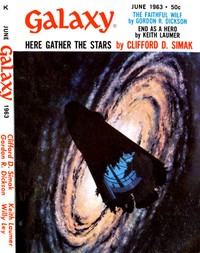
For End as a Hero — Background and Themes, the stored edition analysis reports 15,654 words, 1 hr 9 min estimated reading time, and 2 detected text sections.
The text analysis averages about 12.8 words per sentence, while the detected sections provide another way to judge how the source is divided.
Project Gutenberg metadata also associates the work with “Science fiction,” connecting these edition facts with the source record’s subject description.
Explore this collection
These alternatives are selected using recorded categories and estimated reading time.
About 47 minutes
Other Worlds
10,672 recorded words. 22 minutes difference from this book's estimate.
View Gutenberg source #51736About 47 minutes
Other Worlds
10,799 recorded words. 22 minutes difference from this book's estimate.
View Gutenberg source #61781About 46 minutes
Other Worlds
10,400 recorded words. 23 minutes difference from this book's estimate.
View Gutenberg source #60809Search stored excerpts and compare books → Choose by your preferences →
Choices use stored catalog measurements. Estimates vary with reading speed. A shared category is a catalog label, not a claim that two books have the same argument or literary quality.
Search reads excerpt text stored with this catalog and links to its associated Gutenberg record. The connection is stored in the site database; this tool does not recheck that every excerpt is word-for-word identical to that external record. Excerpt search does not cover every chapter and does not verify historical publication dates.
Catalog snapshot checked: 2026-09-25. Coverage: 92 public books, 92 available source excerpts.
Read the complete public-domain text at its original source.
Read on Project GutenbergThe story opens with a first-person narrator emerging from a dream of swimming in white fire into a waking nightmare of severe burns, a broken leg, and a fractured skull. He is alone in a lifeboat, having survived contact with the Gool—an alien threat. The visceral description of his injuries, from a blackened forearm to bone-ends grating, establishes a tone of grim endurance. The narrator’s matter-of-fact tone, even when recalling crawling to a first-aid cabinet, suggests a hardened soldier. Yet he also notes the improbability of his survival and actions, hinting at abilities beyond normal human capacity.
The opening excerpt focuses on the narrator’s severe injuries and his struggle to treat them. He describes his left arm as “baked,” with “deep red showing at the bottom of the cracks,” and his right leg broken. Despite these wounds, he manages to crawl to a first-aid cabinet and later dog the entry port shut. The narrative dwells on the pain and the mechanical aids—a walking brace and a power truss—that keep him functional. This emphasis on physical damage and recovery sets up a protagonist who endures extreme suffering, but also one whose resilience may be enhanced by unknown factors. The mention of being the “first recorded survivor of contact with the Gool” adds stakes: his survival is both a miracle and a potential threat.
In the later excerpt, the narrator demonstrates psychic abilities, reading minds and influencing others. He brushes across a driver’s mind to make him apologize for running out of gas, then uses a password gleaned from a guard’s thoughts to enter a military base. His internal monologue reveals a calculating, almost detached approach: “I touched his mind. The password is ‘hot-point.’” The ease with which he bypasses security contrasts sharply with his earlier physical helplessness. This section shows a different kind of power—subtle, mental, and invasive. The narrator’s ability to sense minds and manipulate perceptions makes him a formidable infiltrator, but also raises questions about his true allegiance and the nature of his mission.
Once inside the Records Center, the narrator accesses a secure vault designed for last survivors of a holocaust. He describes the chamber with bunks, a galley, radiation suits, and a red hot-line to Washington. The vault is both a refuge and a prison, stocked for indefinite occupancy. The narrator’s methodical exploration—opening cabinets, finding a first-aid kit, studying the locking mechanism—shows his preparation and purpose. He notes that the “Big Vault” yields only to a computer command, which he spends half an hour cracking. This setting, with its self-contained facilities and isolation, becomes a stage for the story’s climax. The narrator’s comment that “everything here I needed” suggests he plans to stay, but the reader is left to wonder what he intends to do with the records and his newfound control.
The narrator’s voice is consistent across excerpts: dry, analytical, and occasionally self-deprecating. He compares his crawl to “Hillary’s trek up Everest” and describes pain as “not anything to do a sense-tape on.” Yet he also acknowledges gaps in his own understanding, such as how he managed to dog the port shut while severely injured. This self-awareness hints at an unreliable narrator—one who may not fully grasp his own abilities or motives. The excerpts do not reveal his name or background, only his mission’s importance. The reader must piece together his identity from his actions and thoughts. The contrast between his physical vulnerability and mental prowess creates tension, and his calm infiltration of a high-security facility suggests a deeper agenda that the incomplete text leaves tantalizingly obscure.
These excerpts offer a focused entry point into the story: a wounded survivor’s physical struggle, his psychic infiltration, and the mysterious vault at the center of his mission. Readers should pay attention to the narrator’s shifting capabilities and the gaps in his own narrative. The incomplete text leaves key questions unanswered—who is he working for, what is the Gool, and what does he intend with the records? The story rewards close attention to detail and a willingness to embrace ambiguity.
There’s something about that wounded survivor’s quiet unraveling—the way his own memories stop feeling like his—that keeps circling back to Dawningsburgh, where the town itself seems to hold its breath the same way. I finished the Records Center sequence and just sat there, thinking about how easily we trade one version of ourselves for another. It’s a strange, lonely comfort to find that echoed elsewhere. Dawningsburgh — Context and Discussion
A brief reflection can help important ideas stay with you longer.