About 34 minutes
The Lights on Precipice Peak — Context and Discussion
Other Worlds
7,726 recorded words. 1 minutes difference from this book's estimate.
View Gutenberg source #49826
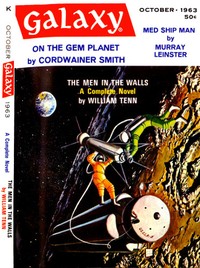
The source record for Sweet Tooth — Key Ideas to Explore measures this digital text at 7,375 words, 33 min estimated reading time, and 1 detected text section.
The text analysis averages about 16.7 words per sentence, while the detected sections provide another way to judge how the source is divided.
Project Gutenberg metadata also associates the work with “Science fiction,” connecting these edition facts with the source record’s subject description.
Explore this collection
These alternatives are selected using recorded categories and estimated reading time.
About 34 minutes
Other Worlds
7,726 recorded words. 1 minutes difference from this book's estimate.
View Gutenberg source #49826About 34 minutes
Other Worlds
7,755 recorded words. 1 minutes difference from this book's estimate.
View Gutenberg source #50889About 32 minutes
Other Worlds
7,328 recorded words. 1 minutes difference from this book's estimate.
View Gutenberg source #51478Search stored excerpts and compare books → Choose by your preferences →
Choices use stored catalog measurements. Estimates vary with reading speed. A shared category is a catalog label, not a claim that two books have the same argument or literary quality.
Search reads excerpt text stored with this catalog and links to its associated Gutenberg record. The connection is stored in the site database; this tool does not recheck that every excerpt is word-for-word identical to that external record. Excerpt search does not cover every chapter and does not verify historical publication dates.
Catalog snapshot checked: 2026-09-25. Coverage: 92 public books, 92 available source excerpts.
Read the complete public-domain text at its original source.
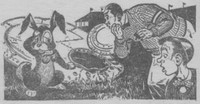
Read on Project GutenbergRobert F. Young's Sweet Tooth opens with a journalist, Dexter Foote, driving a new convertible toward a fallen star assignment. The story quickly veers into absurdity when two metallic, Humpty Dumpty-like aliens begin eating his car—chrome, headlights, motor, and all. The narrative voice balances deadpan reporting with grotesque detail, as when the aliens' mouths are described as having 'maws the hue of an open hearth at tapping time.' Young uses the car-eating premise to set up a contrast between human expectations of alien contact and the creatures' literal consumption of American automobiles.
The aliens in Sweet Tooth do not communicate or negotiate; they eat. Their first encounter with Dexter's convertible is a sequence of CRUNCH sounds, each bite removing a component. The story treats this not as a threat but as a bizarre appetite. When the military sets a trap using a Cadillac, the aliens again begin licking chrome and biting. The consumption is methodical, almost ritualistic, and the humans respond with bafflement rather than fear. Young never explains the aliens' motives, leaving their behavior as a satirical mirror of human consumerism: the creatures treat cars as food, just as humans treat them as status symbols.
The military response is a study in overkill. Colonel Mortby and General Longcombe set up floodlights, microphones, speakers, and a TV camera around a bait Cadillac, treating the operation as a media event. The general's outburst—'Monsters! I'll blow you to Kingdom Come personally!'—underscores the impotence of human authority. The soldiers' planning is meticulous yet pointless, as the aliens simply ignore the spectacle and eat. Young contrasts the military's theatrical preparations with the aliens' slow, relentless approach, highlighting the gap between human systems of control and alien indifference.
Dexter Foote serves as the reader's surrogate, observing with a mix of professional detachment and personal loss. His convertible 'shared a spot next to his heart with his best girl,' a detail that humanizes the absurd premise. Throughout, Dexter tries to make sense of events, asking why intelligent beings would behave like 'gluttonous savages.' His attempt to write an article titled 'The Solid Cheese Cadillac' suggests a struggle to frame the inexplicable in familiar terms. Young uses Dexter's perspective to ground the story in a recognizable, if bewildered, human reaction.
Sweet Tooth rewards attention to its tonal shifts: from slapstick car-eating to military farce to a final, larger revelation. The story's brevity—under 7,400 words—belies its layered satire. Readers may note how Young withholds any explanation for the aliens' behavior, leaving the focus on human responses. The ending, involving a gigantic ship, expands the scale without resolving the central puzzle, inviting reflection on what contact with the truly alien might mean.
The rain drummed on my window while Dexter Foote’s Cadillac vanished, chrome and all, and I kept thinking about how easily we mistake hunger for hostility. That afternoon, the quiet dread of that story followed me to the shelf, where I pulled down Captain of the Kali — Context and Discussion, wondering if its sea-bound captain felt the same confusion—wanting something, mistaking what it was.
Build a private reading journal entry for this title.