About 34 minutes
Gourmet — Background and Themes
Space Future
7,639 recorded words. 1 minutes difference from this book's estimate.
View Gutenberg source #51597
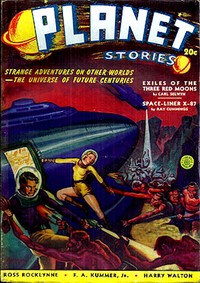
Asteroid H277—Plus — Context and Discussion can be approached with a clearer sense of reading commitment from its source measurements: 7,557 words, 33 min estimated reading time, and 1 detected text section.
The text analysis averages about 16.8 words per sentence, while the detected sections provide another way to judge how the source is divided.
Project Gutenberg metadata also associates the work with “Science fiction,” connecting these edition facts with the source record’s subject description.
Explore this collection
These alternatives are selected using recorded categories and estimated reading time.
About 34 minutes
Space Future
7,639 recorded words. 1 minutes difference from this book's estimate.
View Gutenberg source #51597About 34 minutes
Space Future
7,629 recorded words. 1 minutes difference from this book's estimate.
View Gutenberg source #53016About 35 minutes
Space Future
7,881 recorded words. 2 minutes difference from this book's estimate.
View Gutenberg source #40964Search stored excerpts and compare books → Choose by your preferences →
Choices use stored catalog measurements. Estimates vary with reading speed. A shared category is a catalog label, not a claim that two books have the same argument or literary quality.
Search reads excerpt text stored with this catalog and links to its associated Gutenberg record. The connection is stored in the site database; this tool does not recheck that every excerpt is word-for-word identical to that external record. Excerpt search does not cover every chapter and does not verify historical publication dates.
Catalog snapshot checked: 2026-09-25. Coverage: 92 public books, 92 available source excerpts.
Read the complete public-domain text at its original source.
Read on Project GutenbergHarry Walton's 1940 story opens with Jon Akars tampering with the air circulators of the Sun-freighter Cinnabar, having dropped a Venusian drug called kui-knor into the system. The drug induces a coma-like state while leaving victims acutely aware—a detail that Walton uses to underline Akars' cruelty as he kicks the paralyzed Captain Cardigan. The narrative immediately establishes Akars as the antagonist, motivated by four kilos of Urulium that navigator Box Jordan had claimed as a ship's prize. The opening's clinical description of the drug's effects and Akars' calculated movements sets a tone of cold, methodical villainy.
Walton builds Akars as a meticulous schemer through small, precise actions: he "backed away from the jimmied manifold", "hastily felt for the emergency mask", and "shrank back into the shadows" at footsteps. The drug kui-knor is described with pseudo-scientific detail—it leaves victims "rigid of muscle, eyes staring fixedly" yet "keenly aware of everything about them". This specificity makes Akars' plan feel plausible within the story's pulp science fiction frame. His grudge against Jordan is personal: he "nursed special ideas for Jordan, the agony of broken bones", which foreshadows a confrontation. The excerpt does not reveal Jordan's fate at this point, leaving the reader to wonder how the navigator might escape.
When Akars lands on asteroid H277—Plus, Walton introduces a strange visual detail: "the basalt blackness of the asteroid shimmered oddly with a strange translucent light". Akars dismisses it as a trick of sunlight, but the description hints at something unnatural. Moments later, "a fountain of fire—cold leaping fire licking upward at the ship" erupts, followed by "saw-edged lightning" that strikes the fuel tanks. The explosion is rendered in visceral, sensory language: "acrid fumes swirled over the control board", "the deck curl back, white hot", and "his ear drums snapped as air fled into space". This sequence shifts the story from a crime thriller to a survival scenario, with the asteroid itself becoming an active, hostile force.
After the crash, Box Jordan reveals he anticipated Akars' betrayal. He explains that the explosion was only a "feeble imitation of the Cinnabar's"—the fuel burned without detonating because "our refrigeration didn't fail". A collision near the wrecked Cinnabar had knocked a hole in one fuel tank, which Jordan exploited. His calm, almost clinical explanation—"I knew what was coming and had only to close my face plate"—contrasts sharply with Akars' earlier arrogance. Jordan's motive is not revenge but justice: "The Cinnabar's widows and orphans will get their share, after all". This resolution reframes the entire story as a contest of wits, with Jordan's patience and foresight triumphing over Akars' brutality.
Walton employs classic pulp devices: a drug that induces paralysis without unconsciousness, a rare metal (Urulium) as the MacGuffin, and a space suit as a plot device. Yet he adds specific scientific touches: the drug's effect on "circulation meters", the "repulsion field" used to maneuver the tender, and the detail that a body in a space suit "loses heat slowly enough for decomposition to make a good start". These elements ground the fantastical premise in a veneer of plausibility. The story's structure—villain's plan, unexpected twist, hero's revelation—is typical of the era, but Walton's tight focus on Akars' perspective through most of the narrative keeps the reader aligned with the antagonist until the final reversal.
Readers should pay attention to how Walton withholds information about Jordan's survival and the asteroid's properties until the climax. The early hints—Jordan's absence from the navigator's compartment, his "tense air of waiting" during the landing—reward careful reading. The story's brevity (under 8,000 words) makes it a quick but layered read, with the asteroid's name "H277—Plus" itself hinting at something extra beyond the charted data.
That old Walton story—how the coldest plans unravel into fire and silence—stayed with me for days. It reminded me of another quiet afterward, the sort that leaves you thinking about trust and betrayal long after the last page. I found that same lingering ache in Traveling Companion Wanted — Reading Notes, though gentler, more like a memory than a warning.
Build a private reading journal entry for this title.