About 35 minutes
Two Whole Glorious Weeks — Themes and Context
Machines Invention
7,835 recorded words. 2 minutes difference from this book's estimate.
View Gutenberg source #60624
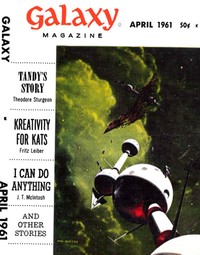
Scent Makes a Difference — Story, Setting & Ideas can be approached with a clearer sense of reading commitment from its source measurements: 7,527 words, 33 min estimated reading time, and 1 detected text section.
The text analysis averages about 14.6 words per sentence, while the detected sections provide another way to judge how the source is divided.
Project Gutenberg metadata also associates the work with “Science fiction,” connecting these edition facts with the source record’s subject description.
Explore this collection
These alternatives are selected using recorded categories and estimated reading time.
About 35 minutes
Machines Invention
7,835 recorded words. 2 minutes difference from this book's estimate.
View Gutenberg source #60624About 36 minutes
Machines Invention
8,104 recorded words. 3 minutes difference from this book's estimate.
View Gutenberg source #50802About 37 minutes
Machines Invention
8,336 recorded words. 4 minutes difference from this book's estimate.
View Gutenberg source #51396Search stored excerpts and compare books → Choose by your preferences →
Choices use stored catalog measurements. Estimates vary with reading speed. A shared category is a catalog label, not a claim that two books have the same argument or literary quality.
Search reads excerpt text stored with this catalog and links to its associated Gutenberg record. The connection is stored in the site database; this tool does not recheck that every excerpt is word-for-word identical to that external record. Excerpt search does not cover every chapter and does not verify historical publication dates.
Catalog snapshot checked: 2026-09-25. Coverage: 92 public books, 92 available source excerpts.
Read the complete public-domain text at its original source.
Read on Project GutenbergThe story opens with a fried egg floating up through stone steps and breaking on the protagonist's shoe—a literal breakfast hallucination that sets the tone for a tale where the boundary between dream and reality is porous. Harry Jones, a physicist, is trying to get a good night's sleep but instead finds himself visited by sleepwalking versions of himself from alternate probabilities. The medical center's elevator drones his biometric data, and the receptionist's nail eroder and the tranquilizer label's mock-pharmaceutical jargon establish a satirical, bureaucratic future.
The story's central conceit is that Harry Jones's sleep disturbances are not mere dreams but visitations from alternate-probability selves. These include Dr. Harold K. Jones, Captain Jones of the Third Vector Spacefleet, and a felon from Arcetus. Each appears while sleepwalking and demands attention, often with threats. The narrative voice is dry and self-deprecating, as when Harry notes, "I must have been very soft in the discrimination to have allowed that revolting nickname." The medical establishment is portrayed as comically inept: Dr. Doogle dismisses the breakfast hallucination as "wish fulfillment" and "poltergeists." The story uses this bureaucratic absurdity to frame its speculative premise.
The title "Scent Makes a Difference" is literal: Harry's memory of Kate's scent helps him fall asleep and later summons her from another probability. When he wakes, Kate is in his room, dressed, and she begins discarding papers from his desk—papers that contain the equation for ultra-uranium he needs. The scent acts as a bridge between probabilities, allowing Harry to access knowledge from a version of himself who died in a bomb explosion. The story does not explain the mechanism, but the recurring motif of scent—from the egg on his shoe to Kate's perfume—anchors the speculative elements in sensory detail.
The excerpts show Harry using the equation from Kate's probability to solve a problem with "elements heavier than uranium." However, the story's ending is not included in the excerpts, so the resolution of the multiple-selves conflict remains unknown. The catalog subjects list "Dreams -- Fiction" and "Identity -- Fiction," which align with the sleepwalking alternates, but "Drugs -- Fiction" is not evident in the provided text. The story's voice is consistent: a blend of scientific jargon and wry humor, as when Harry reflects, "It was so improbable that I was the only me who had worked on these lines." The excerpts suggest a closed-loop logic where each self contributes a piece of the puzzle.
Readers should pay attention to the story's use of recurring details—the egg, the scent, the nickname "Haroldkin"—as they accumulate meaning across the sleepwalking episodes. The narrative does not explain its own rules, so the pleasure lies in tracking how each alternate self adds a new constraint or clue. The ending, not included here, may or may not resolve the central tension, but the journey through probable selves is the story's real subject.
I remember nights spent with Harry Jones, his sleepwalking selves crowding the dark like misremembered scents. That story lingers, the way certain ideas do, quietly insisting. Years later, I found a companion in The Non-Electronic Bug — Reading Companion. They share a patient, unhurried wonder, two old friends nodding to each other across my shelf, each promising company without ever demanding attention.
Build a private reading journal entry for this title.