About 55 minutes
Self Portrait — Text and Context
Machines Invention
12,512 recorded words. 0 minutes difference from this book's estimate.
View Gutenberg source #51534
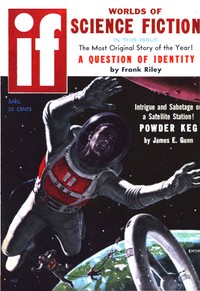
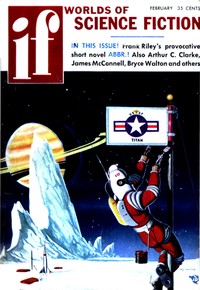
The catalog record for A Question of Identity — A Closer Reading provides practical reading context through 12,588 words, 55 min estimated reading time, and 2 detected text sections.
The text analysis averages about 16.1 words per sentence, while the detected sections provide another way to judge how the source is divided.
Project Gutenberg metadata also associates the work with “Science fiction,” connecting these edition facts with the source record’s subject description.
Explore this collection
These alternatives are selected using recorded categories and estimated reading time.
About 55 minutes
Machines Invention
12,512 recorded words. 0 minutes difference from this book's estimate.
View Gutenberg source #51534About 52 minutes
Machines Invention
11,764 recorded words. 3 minutes difference from this book's estimate.
View Gutenberg source #50936About 60 minutes
Machines Invention
13,652 recorded words. 5 minutes difference from this book's estimate.
View Gutenberg source #61481Search stored excerpts and compare books → Choose by your preferences →
Choices use stored catalog measurements. Estimates vary with reading speed. A shared category is a catalog label, not a claim that two books have the same argument or literary quality.
Search reads excerpt text stored with this catalog and links to its associated Gutenberg record. The connection is stored in the site database; this tool does not recheck that every excerpt is word-for-word identical to that external record. Excerpt search does not cover every chapter and does not verify historical publication dates.
Catalog snapshot checked: 2026-09-25. Coverage: 92 public books, 92 available source excerpts.
Read the complete public-domain text at its original source.
Read on Project GutenbergFrank Riley's A Question of Identity opens with a courtroom already saturated by media: two hundred million viewers watch from Earth and satellite stations as Jake Emspak, the "million dollar mouthpiece," approaches a prospective juror. The scene establishes a central tension between public spectacle and philosophical inquiry. Riley's prose is lean and visual, favoring concrete details—the "gold head of the cane," the "shaggy mane of white hair"—over interior monologue. The dialogue, too, is stripped to its essentials: Emspak's repeated question "What is a man?" lands with the weight of a gavel, and the juror's stammered inability to answer sets up the novel's core puzzle.
Riley's word choices consistently blur the line between the human and the mechanical. The defendant Tony Corfino is described as having eyes "wide and bewildered, like the eyes of a confused child—or of an old man," a simile that already hints at a fractured identity. Later, the doctor's clinical language—"cornea transplants," "elementary surgery," "construction of parts for the human body"—contrasts sharply with Emspak's philosophical register. The defense attorney's vocabulary shifts between gentle prodding ("we are only looking for some basic truths") and theatrical emphasis ("I am sure this Court and the Jury will do just that"). Riley uses this lexical friction to dramatize the conflict between scientific reductionism and a more elusive sense of personhood.
Riley assigns distinct vocal qualities to each character, making voice a marker of power and credibility. Emspak's "magnificent voice, which could thunder, rasp, weep and persuade in all the registers of eloquence," is described in almost operatic terms, while the doctor speaks "angrily" and "coldly," his words delivered "with such an air of finality." The prospective juror, by contrast, can barely form a sentence. Even the narration itself adopts a courtroom cadence, with short declarative sentences and frequent interruptions by stage directions like "Jake nodded" or "the doctor's jaw set stubbornly." This attention to vocal texture reinforces the idea that identity is performed and contested through speech.
The narrative is built around a series of escalating confrontations, each structured as a miniature trial within the trial. Emspak's cross-examination of Dr. Clendenning follows a pattern: a simple question, a reluctant answer, a demand for clarification, and a final, devastating admission. Riley repeats this rhythm with the parade of "educators, religious leaders and philosophers" who follow, creating a cumulative effect. The courtroom itself becomes a stage for competing definitions, and the reader is positioned as a juror, forced to weigh evidence without access to the defendant's interiority. The excerpts offer no direct access to Tony Corfino's thoughts; he remains an object of testimony, not a subject.
Certain images recur with the insistence of a legal refrain. Emspak's cane—"the gold head of the cane that had been his trademark"—appears in nearly every scene, a prop that signals both his age and his theatricality. The television booth, with the 80-year-old Edward R. Murrow as a silent observer, anchors the story in a specific media moment (1958) while also suggesting that identity is now performed for a global audience. The doctor's definition of the human body as "an animal organism, differing in only a few respects from other animal organisms" is quoted verbatim, giving it the weight of a legal exhibit. These repeated details create a texture of material evidence against which the abstract question of identity is measured.
Riley's novella is best approached as a thought experiment staged as a legal thriller. The excerpts suggest that the author is less interested in whodunit than in what it means to be a who at all. Readers should attend to the way each witness's testimony reveals more about the speaker's assumptions than about the defendant. The incomplete text leaves the verdict unknown, but the question—posed by Emspak, echoed by the doctor, and left hanging in the air—is the real subject of the book.
Reading A Question of Identity, I kept thinking about how Jake Emspak’s careful questions peeled back certainty—and that reminded me of another courtroom’s quieter dread, where the shell of a man hides something stranger than memory. There’s a shared ache in both, a hesitation before the verdict. Seven-Day Terror — Inside the Classic felt like its shadow, waiting in my shelf’s corner, patient and unresolved.
Build a private reading journal entry for this title.