About 35 minutes
Syndrome Johnny — Key Ideas to Explore
Social Speculation
7,964 recorded words. 0 minutes difference from this book's estimate.
View Gutenberg source #51231
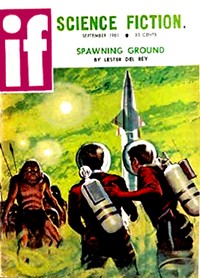
This digital edition of Tolliver's Orbit — A Closer Reading is described by source-level measurements including 7,977 words, 35 min estimated reading time, and 1 detected text section.
The text analysis averages about 14.7 words per sentence, while the detected sections provide another way to judge how the source is divided.
Project Gutenberg metadata also associates the work with “Science fiction,” connecting these edition facts with the source record’s subject description.
Explore this collection
These alternatives are selected using recorded categories and estimated reading time.
About 35 minutes
Social Speculation
7,964 recorded words. 0 minutes difference from this book's estimate.
View Gutenberg source #51231About 34 minutes
Social Speculation
7,774 recorded words. 1 minutes difference from this book's estimate.
View Gutenberg source #51519About 33 minutes
Social Speculation
7,524 recorded words. 2 minutes difference from this book's estimate.
View Gutenberg source #60747Search stored excerpts and compare books → Choose by your preferences →
Choices use stored catalog measurements. Estimates vary with reading speed. A shared category is a catalog label, not a claim that two books have the same argument or literary quality.
Search reads excerpt text stored with this catalog and links to its associated Gutenberg record. The connection is stored in the site database; this tool does not recheck that every excerpt is word-for-word identical to that external record. Excerpt search does not cover every chapter and does not verify historical publication dates.
Catalog snapshot checked: 2026-09-25. Coverage: 92 public books, 92 available source excerpts.
Read the complete public-domain text at its original source.
Read on Project GutenbergThe story opens with a tense office confrontation on Ganymede, where pilot Johnny Tolliver flatly refuses to participate in his manager Jeffers's graft scheme. Tolliver's black thatch is "ruffled, as if he had been rubbed the wrong way," and he dismisses Jeffers's offer with a grin, saying he only wants to finish his year and return to Earth for an engineering degree. The setting is established through sensory details: Jeffers's "big moon-face" glows reddish, brightening the office, while outside the dome the surface is "cold, dim and rugged," with Jupiter a distant semi-disk. This contrast between the heated argument and the bleak lunar landscape sets the tone for a story where personal motives clash with corrupt systems.
Tolliver's dialogue is marked by a laconic, almost amused resistance. When Jeffers threatens to fire him, Tolliver retorts, "You can't fire me," citing his contract with base pay and hazardous duty. His parting line—"The hazardous part is just being on the same moon as you for the next six months"—captures his blend of wit and stubbornness. Jeffers, by contrast, speaks in grumbling, self-justifying bursts, his face growing "a shade more ruddy" as he loses control. The power struggle is conveyed through physical cues: Jeffers fidgets, his chair creaking under his bulk, while Tolliver stands with fists in his pockets, shaking his head. The excerpt does not reveal whether Tolliver's defiance is principled or merely pragmatic, but his refusal to be "suckered in" establishes a clear moral boundary.
Ganymede is depicted as a harsh, dim environment. The office window shows a "cold, dim and rugged" surface, and the only brightness comes from Jeffers's flushed face. Later, when Tolliver and Betty approach the spaceship, the light is described as "dim," and the landscape is punctuated by "slides and volcanic puffballs." The ship itself is ready for takeoff, its landing dome collapsed and stored. The colony's isolation is underscored by the presence of a tractor "breasting a rise in the ground"—a vehicle that signals pursuit. The physical details—the airlock, the ladder, the acceleration seat—ground the speculative setting in concrete, functional objects. The story does not elaborate on the colony's layout or daily life, but the excerpts suggest a frontier outpost where survival depends on machinery and vigilance.
The plot takes a turn when Betty, the manager's daughter, reveals she has a Space Patrol contact. Tolliver's reaction is one of exasperated realization: "They really sent her out to nail someone." The Patrol officer on the screen seems to have been waiting for her call, accepting the request "as if he had been hanging in orbit merely until learning who to go down after." Betty's role is ambiguous—she stumbles onto Jeffers's corruption "by plain dumb luck," yet she is clearly part of a larger operation. Tolliver, who initially wanted only to avoid trouble, is now complicit in a scheme he did not choose. The excerpt cuts off before the resolution, leaving the reader to wonder how Tolliver's orbit—both literal and metaphorical—will be altered by these events.
Readers should pay attention to the story's use of physical details—the creaking chair, the dim light, the weightless struggle to remove a spacesuit—as they reveal character and tension without explicit commentary. The title "Tolliver's Orbit" hints at a trajectory that is both spatial and moral; the excerpts suggest a narrative where the protagonist's path is shaped by forces beyond his control. The incomplete text leaves key questions unanswered, making this a work that rewards close attention to its early cues.
There are books that share a shadowy shelf, whispering to one another across decades. Tolliver’s Orbit taught me how quiet defiance looks against grim fluorescent light. Beside it sits a gentler memory—a red bag, small and stubborn, holding its own secret heaviness. They never argue. They simply nod, patient, like old friends awaiting a borrowed glance. So it goes with The Little Red Bag — Inside the Classic, another keeper of modest truths.
Save your reaction, strongest insight, and memorable passage.