About 26 minutes
The Semantic War — Background and Themes
Social Speculation
5,980 recorded words. 1 minutes difference from this book's estimate.
View Gutenberg source #51153
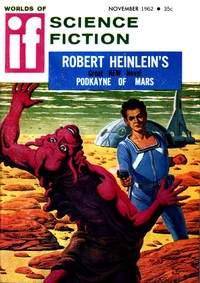
The Man Who Flew — Inside the Classic can be approached with a clearer sense of reading commitment from its source measurements: 6,040 words, 27 min estimated reading time, and 1 detected text section.
The text analysis averages about 14.6 words per sentence, while the detected sections provide another way to judge how the source is divided.
Project Gutenberg metadata also associates the work with “Science fiction,” connecting these edition facts with the source record’s subject description.
Explore this collection
These alternatives are selected using recorded categories and estimated reading time.
About 26 minutes
Social Speculation
5,980 recorded words. 1 minutes difference from this book's estimate.
View Gutenberg source #51153About 30 minutes
Social Speculation
6,831 recorded words. 3 minutes difference from this book's estimate.
View Gutenberg source #51571About 23 minutes
Social Speculation
5,122 recorded words. 4 minutes difference from this book's estimate.
View Gutenberg source #51397Search stored excerpts and compare books → Choose by your preferences →
Choices use stored catalog measurements. Estimates vary with reading speed. A shared category is a catalog label, not a claim that two books have the same argument or literary quality.
Search reads excerpt text stored with this catalog and links to its associated Gutenberg record. The connection is stored in the site database; this tool does not recheck that every excerpt is word-for-word identical to that external record. Excerpt search does not cover every chapter and does not verify historical publication dates.
Catalog snapshot checked: 2026-09-25. Coverage: 92 public books, 92 available source excerpts.
Read the complete public-domain text at its original source.
Read on Project GutenbergThe story opens with a detective whose conscience bothers him, a detail that immediately signals internal conflict. Keller, an A-2 telepath, works in a humbly furnished office, and his first client in three months, Harold Radcliffe, is a C-3 with unexercised extrasensory perception. The narrative voice is terse, with thoughts rendered in bold and punctuated by mental images: Image: Fear. Terror. Anxiety. Nonono. Hole in the air. THE MAN WHO FLEW. Pain. This fragmented telepathic style is central to the story's tension.
The story establishes a rigid classification of psychic ability: A-2 (Keller), A-3 (Radcliffe after transformation), and C-3 (Radcliffe initially). These grades govern professional standing—Keller is the only A-2 detective in the state. The office setting is spartan, with an intercom system and a secretary, Sally, who communicates telepathically. Keller's internal monologue reveals his financial desperation: "he should change jobs if he wanted to eat." The power dynamic between Keller and Radcliffe shifts as Keller scans the client's mind, noting a "block—an unusual thing for a C-3." This hierarchy is not merely background; it drives the plot, as Radcliffe's mental upgrade to A-3 occurs through Sally's intervention, a twist that recontextualizes the earlier interactions.
The central mystery is a murder in a locked room: Radcliffe's wife found dead on the floor, with the killer apparently vanishing. Keller deduces that the killer is "THE MAN WHO FLEW," who teleported out, leaving a vacuum—"the hole in the air." This explanation blends science-fictional logic with detective conventions. The story uses telepathy as an investigative tool, but also as a source of unreliability: Keller's scans produce fragmented images, and Radcliffe's mind resists coherent narrative. The phrase "melting walls" suggests a physical trace of the teleportation, grounding the fantastic in sensory detail. The puzzle is solved not through physical evidence but through mental confrontation, culminating in Keller's confession that he himself is the killer.
The climax hinges on a shocking revelation: Keller, the detective, is also the murderer. The narrative shifts from third-person limited to a direct telepathic exchange: "IT'S ME, RADCLIFFE. I AM THE MAN WHO FLEW." This twist is prepared by earlier hints—Keller's guilty conscience, his knowledge of details he shouldn't possess, and the strange merging of identities in the final lines: "Memeusus.... Wethreewethreewethree...." The story ends with a dissolution of self, suggesting that Keller, Radcliffe, and perhaps Sally have become a single entity. The reader is left to question how much of the investigation was genuine and how much was a post-hoc rationalization by a fractured mind.
Readers should pay close attention to the telepathic exchanges, especially the bolded thoughts and the fragmented images that precede the climax. The story's brevity—under 6,000 words—means every detail counts, from the initial description of the weather to the final merging of pronouns. The classification system (A-2, C-3, etc.) is not explained but is essential to understanding the characters' capabilities and limitations. Approach this as a puzzle where the detective's own mind is the crime scene.
That rain kept tapping the window while Keller’s fragmented thoughts lingered, the way a half-remembered dream does. Afterwards, I found myself thinking about how we’re all partly hidden from each other. A friend left The Man Who Was Six — Story, Setting & Ideas on the table, and its quiet examination of identity felt like the same conversation, continued in a softer key.
Save your reaction, strongest insight, and memorable passage.