
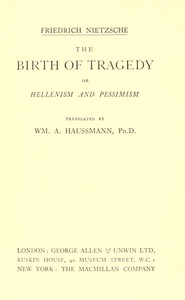
The Birth of Tragedy; or, Hellenism and Pessimism by Friedrich Wilhelm Nietzsche
So, what's this book actually about? Don't worry, there's no plot in the traditional sense. Think of it as Nietzsche's big, passionate theory about where art comes from. He uses two Greek gods to explain it all. Apollo represents order, beauty, and the dreamy illusions that make life bearable. Dionysus is his opposite: the god of chaos, ecstasy, raw emotion, and the sometimes terrifying truth of existence. Nietzsche's big idea is that ancient Greek tragedy was so powerful because it brought these two forces together. The structured play (Apollo) gave form to the painful, chaotic truths of life (Dionysus). He then argues that this perfect balance was lost, and he takes some sharp shots at thinkers like Socrates for killing the creative, instinctive spirit with too much logic and reason.
Why You Should Read It
This isn't just a history lesson. Reading this book feels like getting a new lens to look at the world. It gives you a language for that feeling when a sad song is also incredibly beautiful, or when a great film leaves you unsettled but deeply moved. Nietzsche makes you question our modern obsession with being happy and comfortable all the time. He suggests that real meaning and powerful art come from acknowledging life's struggles, not pretending they don't exist. It's a challenging but thrilling perspective shift.
Final Verdict
This book is perfect for creative souls, music lovers, theater fans, or anyone who's ever been curious about why we make art. It's also a great first step into Nietzsche's world if his later work seems too intimidating. Just be ready for a dense read—it's more of a slow, thoughtful sip than a quick gulp. Come for the ancient Greek drama, stay for the mind-bending ideas about how we find joy in a world that can be pretty tough.
The copyright for this book has expired, making it public property. It is available for public use and education.
Susan Gonzalez
1 year agoLooking at the bibliography alone, the insights into future trends are particularly thought-provoking. Finally, a source that prioritizes accuracy over hype.
Robert Smith
3 months agoInitially, I was looking for a specific answer, but the author’s unique perspective adds a fresh layer to the discussion. I’ll definitely be revisiting some of these chapters again soon.
Kimberly Gonzalez
2 years agoAfter spending a few days with this digital edition, the clarity of the writing makes even the most dense sections readable. Simple, effective, and authoritative – what else could you ask for?
Linda Wilson
9 months agoThe information is current and very relevant to today's needs.






Jessica Miller
1 year agoComparing this to other titles in the same genre, the author’s unique perspective adds a fresh layer to the discussion. I am looking forward to the author's next publication.