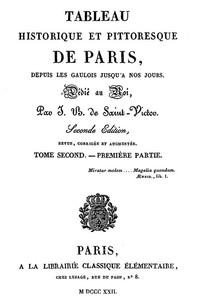
Tableau historique et pittoresque de Paris depuis les Gaulois jusqu'à nos jours…
J. B. de Saint-Victor’s "Tableau historique et pittoresque de Paris" (that’s French for something like "A historical and colorful picture of Paris") might sound like a monster title, but inside? It’s a chatty miracle. First published in 1808, this book reads like a blog post from your most brilliant, obsessive friend who’s totally obsessed with Paris. Saint-Victor wasn’t just a writer; he was a lover of secrets. And he spills all of them here.
The Story
Warts and all. That’s the plot. Instead of focusing on kings and dates, Saint-Victor tromps through ancient Roman streets that became filthy medieval alleys that turned into spectacle-filled modern boulevards. He shows you how Paris grew wild—like kudzu—shoving churches next to dumps, building over plague pits, hiding catacombs under fashion houses. Battles? He’s got ’em, from the Gauls to the French Revolution. But mostly, he’s obsessed with daily life: what people ate, what they complained about, what rumors floated over cups of wine. The hook? Paris almost killed itself multiple times—civil wars, floods, famine—but somehow rebuilt itself bigger each time. How?
Why You Should Read It
Take a deep breath, because this isn’t a sanitized travel guide. Saint-Victor paints Paris with grime and glory equally. You’ll smell the gutters, see the beggars lurk near palaces, and hear the drumrolls of revolution long before the shots. His language is wild—sorta poetic and blokey at the same time. You know that thrill when someone shows you photos of your favorite celebrity before they were famous? That’s what this book is. Hard-core skeptics will roll their eyes because he can get long-winded and colonial-tastic (it’s a product of its time), but I rooted through all that because his passion is utterly infectious. For me, it changed how I look at Paris: now I see not streets, but stories stacked like bricks.
Final Verdict
This book’s best friend is anyone planning a trip to Paris and clueless about the backgrounds. Or locals who want to feel extra smug watching tourists gaping at Notre Dame, having just read how saint bones were dragged through mud to build it. Also great for Euro-history fans weary of textbook fact-engines. Here, history bats its lashes. Heads up: The Victorian-packaged sentences get twisty, so read it with a coffee by hand. But loyalty pays off—you’ll never again stroll a Paris street without feeling skeletons underfoot. Just… deliciously so.”
This masterpiece is free from copyright limitations. You are welcome to share this with anyone.