
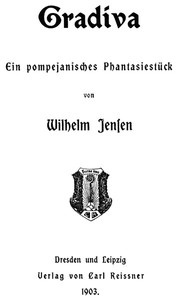
Gradiva: Ein pompejanisches Phantasiestück by Wilhelm Jensen
Wilhelm Jensen's Gradiva is a hidden gem from 1903 that feels surprisingly modern. It’s a quick read, but it sticks with you long after you finish the last page.
The Story
Norbert Hanold, a dedicated but socially awkward archaeologist, falls for a museum sculpture of a young woman he names Gradiva (‘the girl who steps along’). Her unique walking posture captivates him, and she starts haunting his dreams, always in the doomed city of Pompeii. Driven by this obsession, he travels to the ruins. There, in the heat and dust, he begins to encounter a woman who looks exactly like Gradiva. She seems to know him, and she moves through the ancient streets as if she belongs there. Norbert is left wrestling with a beautiful, terrifying question: is he meeting a ghost from 79 AD, or is his mind playing the most elaborate trick on him?
Why You Should Read It
This isn't just a period piece. The heart of the story is Norbert’s slow, painful awakening—not from a dream, but from a life lived entirely inside his own head. Jensen writes about obsession in a way that feels real and a little uncomfortable. The setting of Pompeii is genius; it’s a place literally frozen in time, the perfect backdrop for a man trying to separate the past from the present. The ‘fantasy’ of the subtitle is key—the book keeps you guessing about what’s real right alongside the main character.
Final Verdict
Perfect for readers who love a psychological puzzle wrapped in a historical setting. If you enjoy stories about unreliable narrators, the power of the subconscious, or the eerie atmosphere of ancient ruins, you’ll find a lot to love here. It’s also a fascinating footnote in literary history, famously analyzed by Freud. But you don't need to be a psychologist to appreciate it—just someone ready for a short, strange, and haunting trip to the past.
You are viewing a work that belongs to the global public domain. Preserving history for future generations.
James Harris
10 months agoIt took me a while to process the complex ideas here, but the language used is precise without being overly academic or confusing. I’ll definitely be revisiting some of these chapters again soon.
Patricia Wilson
1 year agoGiven the current trends in this field, the case studies and practical examples provided add immense value. The price-to-value ratio here is simply unbeatable.
Thomas Taylor
2 months agoHaving read the author's previous works, the author’s unique perspective adds a fresh layer to the discussion. This is a solid reference for both beginners and experts.
George Perez
2 months agoThe citations provided are a goldmine for further academic study.





Patricia Anderson
1 year agoMy first impression was quite positive because the transition between theoretical knowledge and practical application is seamless. The price-to-value ratio here is simply unbeatable.